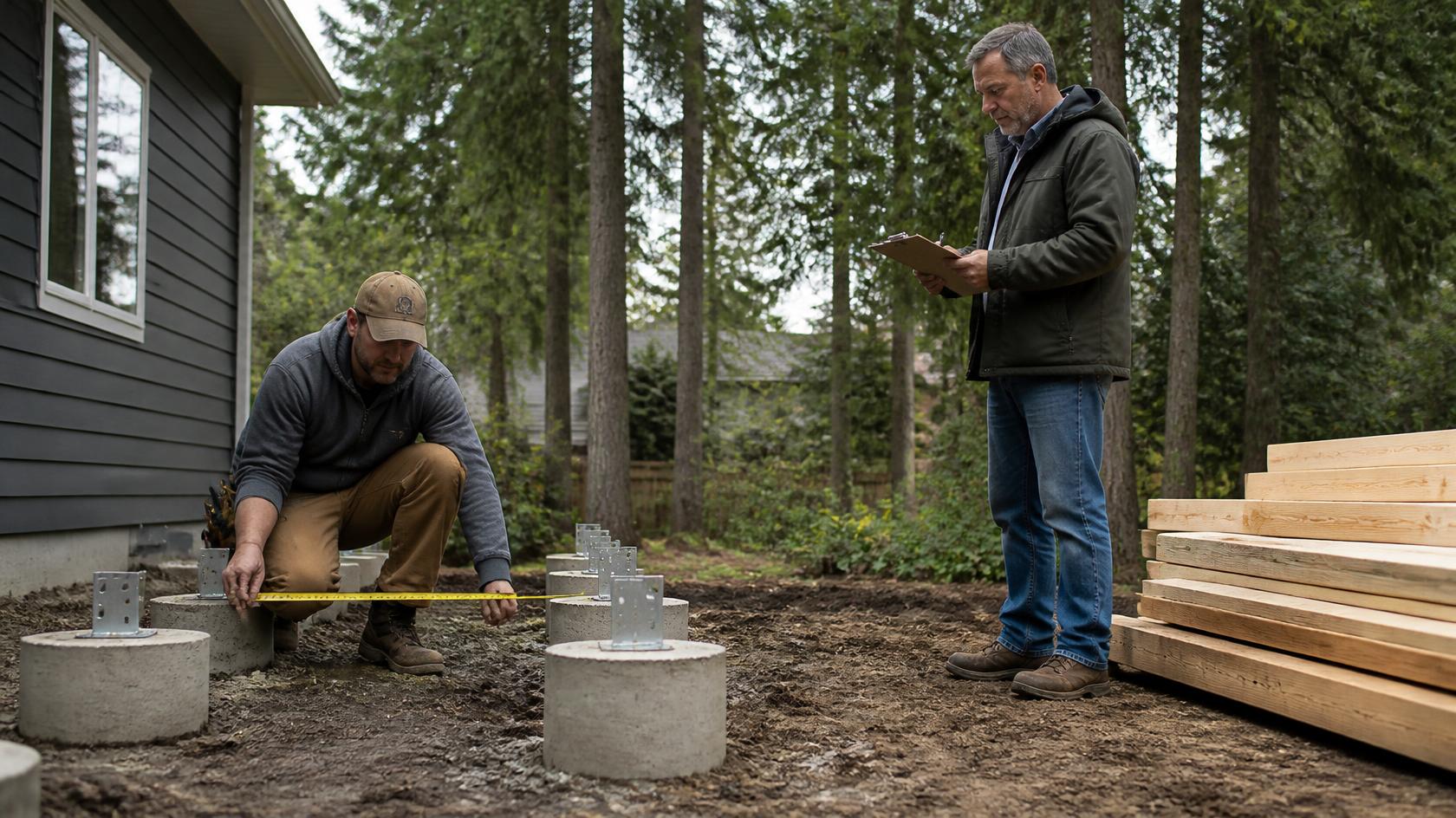
Most homeowners need a deck permit, and the deck builder is usually the one who pulls it. In most towns, an attached deck, a deck more than 30 inches off the ground or anything over 200 square feet needs a building permit. Deck builders who explain that clearly at the estimate look like the pro in the room and win more jobs.
By Carl Jiang, Co-Founder · Last updated October 2026
Permits are boring. I get it. But we work with deck builders across the country, and the ones who treat permit talk as part of the sales pitch close more estimates than the ones who mumble “yeah, we’ll handle that” and move on to board colors. Homeowners are nervous about permits. They’ve heard horror stories from neighbors. If you’re the contractor who calms that worry in five minutes, you’ve just separated yourself from the guy who said “you don’t really need one.”
This one’s for you, the builder. Not the homeowner googling at midnight.
Do you need a permit to build a deck?
Usually, yes. The International Residential Code, which most US towns adopt in some form, exempts only small, low, freestanding decks. Here’s how one Washington city spells it out on its residential permit exemptions page: decks under 200 square feet, no more than 30 inches above grade at any point, not attached to the house, and not serving a required exit door. Miss any one of those and you need a permit.
So the typical job you’re quoting (attached to the house, off the slider, a few feet up on a sloped lot) needs one. Every time.
And local rules vary. Some cities add their own triggers like setbacks, critical areas, shoreline rules or HOA review on top of the code. I’d keep a one-page cheat sheet for every jurisdiction you work in. In the Pacific Northwest that might mean Tacoma, Puyallup and Olympia all have slightly different submittal checklists, and you should know them better than the homeowner’s brother-in-law does.
Who pulls building permits, the contractor or the homeowner?
In most cases the licensed contractor doing the work pulls the permit, and that’s how it should be. Some jurisdictions let homeowners pull an owner-builder permit, but that puts the homeowner on the hook as the responsible party, and it’s often a red flag that someone’s trying to dodge licensing rules.
My take: always pull it yourself, and say so in the estimate. When a homeowner asks “can we skip the permit to save money?” you’ve got a ready answer. No. And here’s why.
- Unpermitted decks can come up during a home sale and stall the closing.
- Insurance claims on an unpermitted structure can get messy fast.
- If the building department finds it, they can order the work opened up for inspection or torn out.
- Your license and your reputation are attached to the job, not theirs.
That last point matters most. A deck that fails because someone skipped the footing inspection will follow your company name around the neighborhood Facebook group for years.

How should deck builders explain a deck permit to homeowners?
Keep it short, put it on paper, and frame it as protection for them. Here’s a script that works. “Your deck is attached to the house and sits about six feet up, so the city requires a building permit. We pull it, we draw the plans, and an inspector checks the footings, the framing and the finished deck. It adds some time up front, but it means the deck is on record as built to code when you sell the house.”
That’s it. Thirty seconds.
Then show them where it fits on the timeline. A simple visual helps a lot more than people expect:
- Signed contract and deposit.
- We draw plans and submit the permit application.
- City review. This is the waiting part.
- Permit issued, materials ordered, crew scheduled.
- Footing inspection before concrete.
- Framing inspection before decking goes down.
- Final inspection and sign-off.
When homeowners see the inspections listed, the permit stops being red tape and starts looking like quality control. Which it is. If you already show them a 3D design at the estimate (we covered that in our deck design guide for deck builders), add a permit slide right after it.
How long does a building permit take?
It depends entirely on the jurisdiction and the season. Some towns issue simple deck permits over the counter or within days. Busy cities can take several weeks, especially in spring when every homeowner decides they want a deck by the Fourth of July.
So don’t promise a number you can’t control. Promise what you can. Tell the homeowner when you’ll submit, give them the review time the city currently posts (most building departments publish this), and tell them you’ll call the day it’s issued.
There’s a sales angle here too. Builders who push homeowners to sign in late winter get their permits through before the spring rush. Use that. “If we sign this month, we’re submitting before the backlog” is true, and it’s a better close than a fake discount deadline.
What are the deck footing requirements?
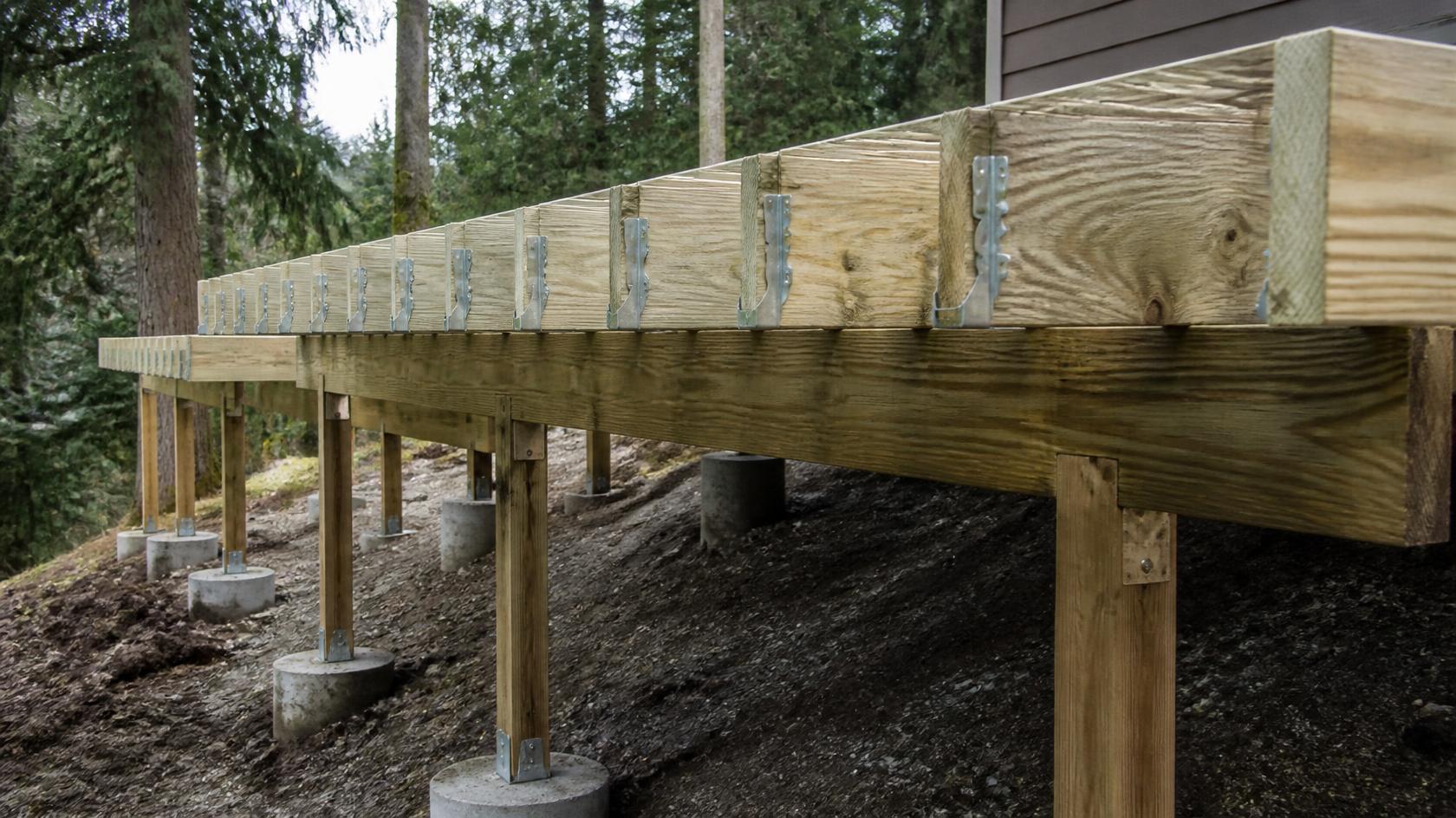
Footings are where inspectors spend the most attention, and for good reason. The American Wood Council’s Prescriptive Residential Wood Deck Construction Guide (DCA 6), which a lot of building departments hand out with their deck permit packets, says footings must bear on undisturbed soil at least 12 inches below the ground surface or below the frost line, whichever is deeper.
The frost line is set locally, so deck footings in the Northern states go far deeper than they do near the coast. Footing diameter depends on the load each post carries, which comes down to joist span, beam span and soil bearing capacity. DCA 6 has tables for that, and your local department may have its own.
| Footing question | Where the answer comes from |
|---|---|
| Minimum depth | 12 inches into undisturbed soil or below the frost line, whichever is deeper |
| Frost line | Your local building department |
| Footing size | Post load, spans and soil bearing (DCA 6 tables or engineered plans) |
| Inspection timing | Before concrete is poured, in most jurisdictions |
Here’s the thing about footings and sales. Homeowners can’t see them once the deck’s done, so they don’t think about them. Bring it up. “We dig every footing below the frost line and the inspector checks the holes before we pour” is one sentence that makes the cheap bid look risky.
Should deck permit costs be in the estimate?
Yes. Put the permit fee and the plan drawing time in the estimate as their own line items. Don’t bury them. Fees are usually set by the city based on project valuation or square footage, so look up the fee schedule and quote it.
Why break it out? Because when a homeowner compares your number to a lower bid, your permit line gives them a question to ask the other guy. “Does your price include the building permit?” If it doesn’t, you just won that comparison without dropping your price.
And yes, permits can stretch the start date. That’s fine. A homeowner who knows why the deck starts in three weeks is calmer than one who was told “next Monday” and is still waiting in a month.
How knowing permits helps deck contractors win jobs
We see this constantly. The deck builder with the best permit story isn’t always the cheapest, but they’re the one homeowners trust. And trust is what fills the calendar in a trade full of tire-kickers and lowball bids.
Put that knowledge to work beyond the estimate, too:
- Write a permit page on your website for each city you serve. Homeowners search “do I need a permit for a deck in [city]” constantly, and it’s a great way into SEO for deck contractors.
- Answer permit questions in your Google Business Profile Q&A and posts. Our Google Business Profile guide covers how.
- Post inspection-day photos on social. A footing inspection photo says “we do this right” better than any slogan.
- Train whoever answers your phone to explain permits in two sentences.
Homeowner-question content works. When Empire Home Solutions, a Cincinnati deck and patio builder, ran local SEO built around deck searches and homeowner-question blog posts, they grew to over 65,000 organic impressions and 472 clicks in twelve months. Paired with Meta ads that pulled 109 qualified leads at $28.64 each, they were booked out for the year within two months (read the Empire case study).
If you’d rather spend your time on job sites than on content calendars, that’s what our deck contractor marketing program is for. We build the site, the permit and service-area pages, the ads and the follow-up. And with our pay-per-appointment option, you pay for booked estimates instead of clicks. Our human appointment setters call your leads, qualify them and put the estimate on your calendar. We take one deck builder per service area, so we’re never marketing your competition. For the full playbook, see our deck contractor marketing guide.
Washington, United States
Phone: (928) 482-6963
Marketing for deck builders and home improvement contractors nationwide, from Washington State.
Frequently asked questions
Who is responsible for pulling a deck permit?
Normally the contractor doing the work. A homeowner can sometimes pull an owner-builder permit, but then they carry the liability. If you’re the builder, take it on yourself and write it into the contract.
What happens if a deck is built without a building permit?
Maybe nothing, for years. Then the house goes up for sale, the inspector flags it, and suddenly someone’s paying to open it up or tear it out. Nobody wants that phone call.
How deep do deck footings need to be?
At least a foot into undisturbed soil, and deeper if the local frost line is lower than that. Call the building department for the frost depth in each town you work in. It changes a lot from place to place.
Do building permits delay deck projects?
They add some lead time, sure, mostly while the city reviews plans. Submitting early in the year helps. So does sending a complete application the first time, because corrections are what really slow things down.
Should deck permit costs be in the estimate?
Yes, as a separate line. It’s honest, it keeps you from eating the fee, and it gives the homeowner a reason to ask your competitors what they left out.
Want your permit know-how working as marketing? Book a Free Strategy Call and we’ll show you what a full calendar could look like in your market, or take a look at our deck contractor marketing service first.