AZEK decking is the PVC line from TimberTech, so the AZEK vs Trex question is really PVC against composite. Deck builders sell premium decking best by stocking one composite and one PVC option, showing samples in person, and pricing a good, better, best spread on every estimate so the homeowner picks the board instead of shopping your number.
By Carl Jiang, Co-Founder · Last updated October 2026
Homeowners show up to the estimate already confused. They’ve read three forum threads, a Trex ad and a showroom brochure, and they want you to tell them which one is “best.” Handle that well and it’s a sales opportunity. Handle it badly and you lose the job to someone who sounded more sure of himself.
This post is written for you, the deck builder. We’ll sort out what AZEK, Trex and TimberTech are, how they compare from an install and margin point of view, and how to present the choice so it helps you close.
What is AZEK decking?
AZEK decking is a capped polymer board, which is a fancy way of saying cellular PVC with a protective cap. There’s no wood flour in it. TimberTech describes the AZEK line as having no wood in the core or cap, and it carries a longer fade and stain warranty than their capped composite PRO line (50 years against 30, per TimberTech’s own comparison page).
So when a homeowner says “I want AZEK,” what they usually mean is the top tier. Lighter boards, no organic content to feed mold, and the highest price per lineal foot of anything you’ll quote. It’s the board you put in front of the client who has already told you they never want to think about the deck again.
Is TimberTech the same as AZEK?
Close, but not quite. TimberTech is the decking and railing brand. AZEK is both the old company name and the name of TimberTech’s premium PVC collection. The boards ship as “TimberTech AZEK,” next to the TimberTech PRO and TimberTech EDGE capped composite lines.
The ownership changed too. James Hardie, the fiber cement siding company, closed its acquisition of AZEK on July 1, 2025. For you that mostly matters at the supply yard and in contractor programs, so ask your rep what’s changing. Homeowners won’t care. Just don’t let them think TimberTech and AZEK are two competing companies, because that’s where the confusion at the kitchen table starts.
How does Trex decking compare to AZEK decking?
Trex is the composite most homeowners have heard of. Its boards blend recycled wood fiber and recycled plastic under a cap. AZEK is PVC with no wood at all. That one difference drives most of what you’ll explain in the field.
| Trex (capped composite) | TimberTech AZEK (capped PVC) | |
|---|---|---|
| Core | Recycled wood fiber and plastic | Cellular PVC, no wood |
| Weight on the job | Heavier | Lighter, easier to carry and cut |
| Moisture and mold | Good, thanks to the cap | Better, nothing organic in the board |
| Brand recognition | Highest with homeowners | Strong with upscale buyers |
| Price position | Entry to mid-high, depending on line | Top of the range |
| Contractor program | TrexPro, Gold, Platinum | TimberTech contractor tiers |
And here’s how I’d frame it out loud: composite feels a bit more like wood underfoot and costs less, while PVC wins on moisture and mold resistance. In wet climates that argument lands. A shaded backyard in Puyallup or Olympia that stays damp from October through April is exactly where PVC earns its premium. A sunny, well-drained lot? A good capped composite is usually plenty.
Which composite decking should a deck builder offer customers?
Offer fewer brands than you think. Most deck builders we talk to carry too many lines, and the homeowner ends up with a counter full of samples and no idea how to choose. Two brands is enough. Three tiers inside them is the sweet spot.
A simple setup that works:
- A value tier, usually an entry Trex or TimberTech EDGE line, for the budget-conscious client and the rental property.
- A middle tier with better color variation and a stronger warranty. This is where most of your jobs should land.
- A premium tier, TimberTech AZEK or a top Trex line, for clients who want the best and are already leaning that way.
Pick the brands your local yard keeps in stock, so lead times don’t kill your schedule in June. Then learn those boards cold. Fastener systems, gapping, joist spacing, how each one handles a picture frame border. Confidence on install details is half of what makes a homeowner trust your recommendation.
Should you become a certified Trex installer? Probably, if Trex is one of your two brands. The TrexPro program has three levels (TrexPro, Gold and Platinum), and Trex says it sends leads to members through Trex.com and Decks.com. Select Gold and Platinum builders can also offer an extended labor warranty. Treat those referrals as a bonus, though. Manufacturer leads get shared, and you don’t control the volume.
PVC decking vs composite: how deck builders sell the upgrade
Don’t sell the board. Sell the outcome, then let the board be the reason.
What works is a three-option estimate, with the middle option being the one you’d build at your own house. Show all three on the same page, same layout, same railing, just the decking line and the price changing. People rarely pick the cheapest option when the jump to the middle is small and clearly explained.
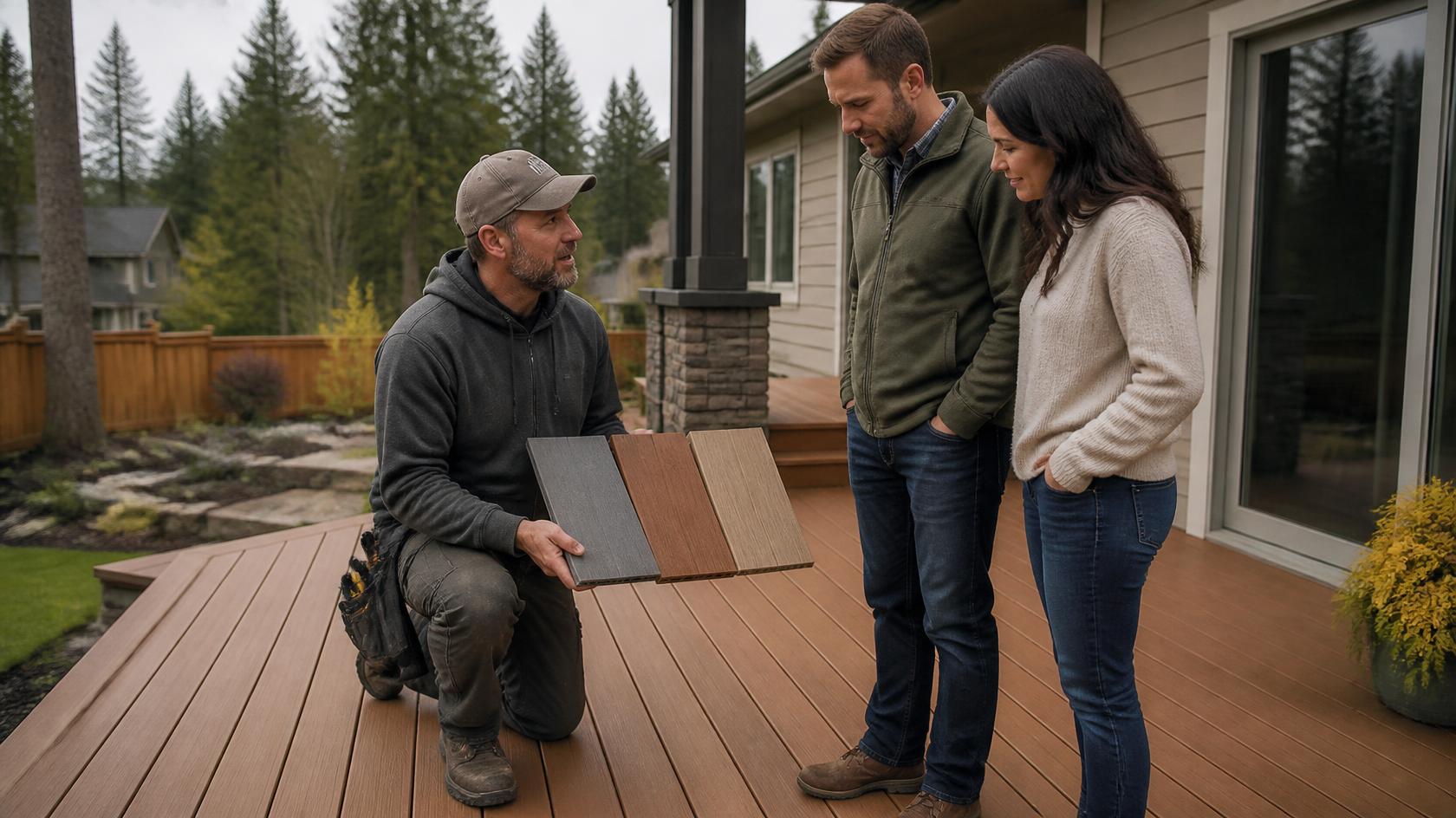
Bring physical samples. Lay them on the existing deck or the patio in the client’s real light. Photos don’t do it. Let them feel the weight difference between a composite board and a PVC board, and let them see how the colors shift outside. That moment does more selling than anything you say.
And use real money numbers when the client asks “is it worth it?” The 2025 Cost vs. Value report puts a national average composite deck addition at $25,096, recouping 89% at resale. A wood deck addition came in at $18,263 and 95%. Composite costs more up front and recoups a bit less on paper. So the real pitch for an upgrade is about maintenance and how long the deck looks good, not resale. Say that out loud. Clients trust the builder who doesn’t oversell.
If your deck design visuals already show each option rendered on the client’s house, the upgrade conversation gets much shorter.
How do you get the homeowners who want premium decking in the first place?
Your marketing decides who’s sitting at the table before you ever pull out a sample. If every lead comes from a “cheap deck builder” search or a shared lead site, you’ll spend your evenings with tire-kickers trying to price-shop a pressure-treated rebuild. Premium boards are a hard sell to someone who came looking for the lowest bid.
So build the funnel around the client you want:
- Write service pages for “composite deck builder” and “Trex deck installer” in each city you serve, with real project photos. Our guide to SEO for deck contractors covers how to structure those.
- Put brand names in your Google Business Profile services and photo captions. Homeowners search for “TimberTech deck builder near me,” and that’s a buyer who already wants the good stuff.
- Ask happy premium clients to mention the material in their review. A review that says “our AZEK deck still looks new after two winters” sells the next one.
- Show finished premium jobs on your site, labeled by board line and color, so people can browse and arrive already decided.
That’s the approach we use in our deck contractor marketing program. And because we only work with one deck builder per service area, the leads we generate in, say, Tacoma or Everett don’t get split with your competitor down the road.
Proof matters here, so here’s ours. Empire Home Solutions, a deck and roofing contractor in Cincinnati, got 109 leads in three months at $28.64 per lead, and within two months they were booked out for the year, even after raising their prices. That last part is the point of this whole post. A full calendar is what lets you stop discounting and start selling the better board. JB’s Enclosures, which builds screen rooms and patio covers in Tennessee, pulled 73 leads in 30 days at $29.21 each.
If you’d rather skip lead chasing altogether, our pay-per-appointment program uses human appointment setters to call your leads and book estimates on your calendar. You pay per booked estimate.
Where we market deck builders
We’re based in Washington State and work with home improvement contractors nationwide. Our Washington clients run from Everett down through Tacoma and Olympia, where wet winters make the PVC versus composite conversation a regular part of every estimate. Want the bigger picture on keeping the calendar full year round? Read our deck contractor marketing guide.
Washington, United States
Phone: (928) 482-6963
Local SEO, Google and Meta ads, pay-per-appointment and websites for deck builders and home improvement contractors nationwide.
Frequently asked questions
Is AZEK worth the extra cost?
For the right client, yes. If the deck sits in shade, near water, or the owner never wants to scrub it, PVC is money well spent. On a sunny lot with a tighter budget, a solid capped composite usually does the job.
What is the best composite decking?
There’s no single winner. The best one for your business is the line your yard stocks reliably, that you install well, and that comes with a warranty you can explain in one sentence. Trex and TimberTech PRO both fit that for a lot of builders.
PVC decking or composite: which should I recommend?
Ask about shade, moisture, budget and how much upkeep they’ll tolerate. Damp and shaded points toward PVC. Budget-driven and sunny points toward composite. Then show both on the estimate and let them choose.
How long do composite deck boards last?
Capped boards from the big brands are built to last decades, and the warranties reflect that. TimberTech, for one, backs PRO for 30 years and AZEK for 50 on fade and stain. Install matters as much as the board. Bad joist spacing or poor drainage will shorten that fast.
Should deck builders become certified Trex decking installers?
If Trex is one of your main lines, it’s usually worth it for the training, the extended labor warranty at higher tiers and the credibility badge. Just don’t count on manufacturer referrals as your main lead source. Build your own.
Want more homeowners who show up ready to buy the premium board? Book a Free Strategy Call and we’ll look at your market, your service area and what it would take to fill your calendar with the jobs you want. Or see how our deck contractor marketing works first.