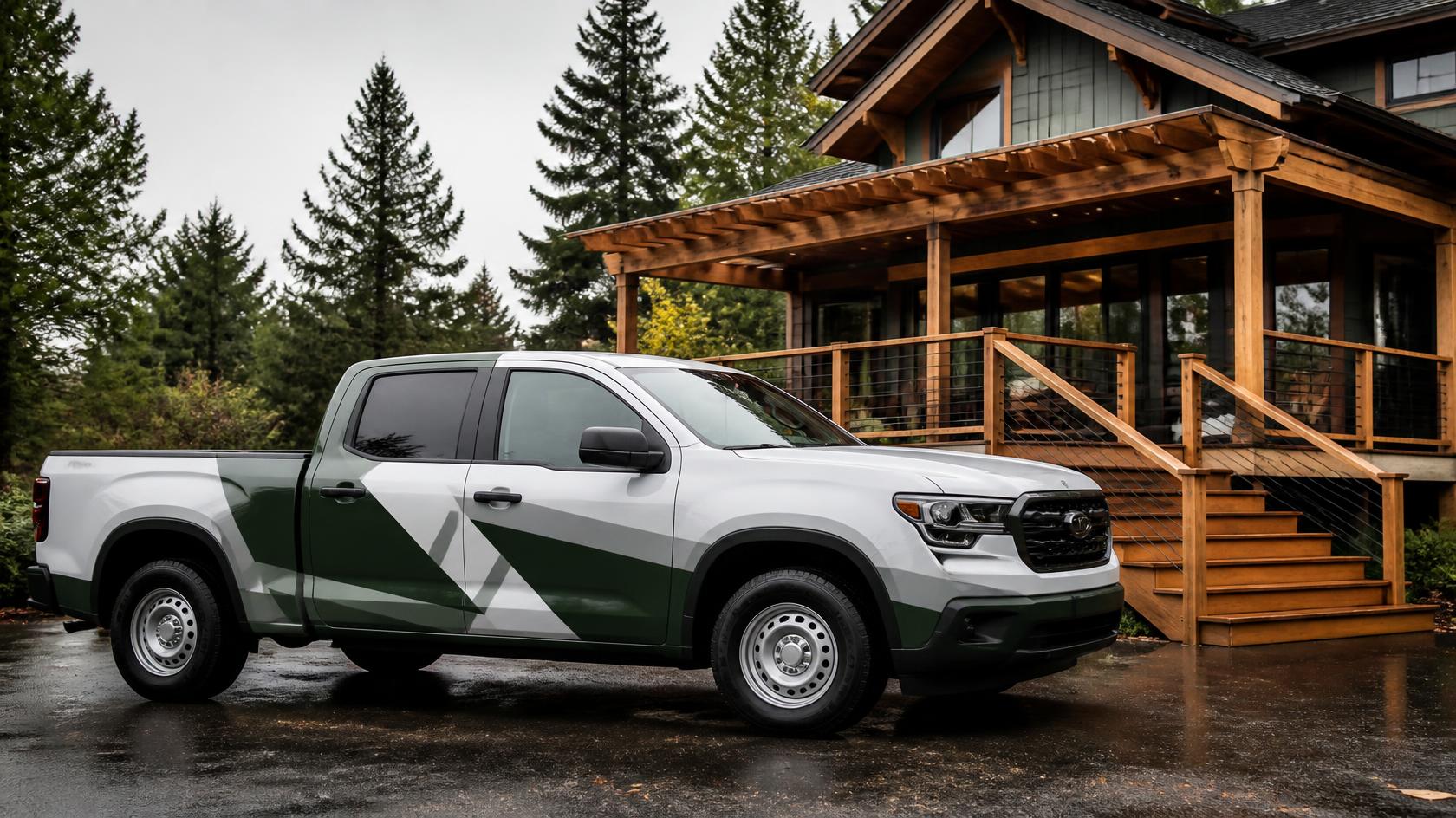
Vehicle wraps for contractors usually cost $3,000 to $6,000 for a full pickup wrap and under $1,000 for basic lettering, and a good film lasts up to eight years on the sides. They pay off when the design is readable at 40 mph and the truck is parked in front of jobs your ideal customers can see. Zeal Media Solutions designs contractor brands from Washington State.
By Carl Jiang, Co-Founder · Last updated October 2026
Your truck is parked in somebody’s driveway for days at a time. Neighbors walk past it. They watch your crew. Some of them have a deck that’s going gray or a roof they’ve been putting off. That’s the pitch for a wrap, and it’s a good one. But I see a lot of contractors spend $5,000 on a wrap that nobody can read from across the street, with a phone number in a font that looks great on a laptop and turns to mush at 30 feet.
How much do vehicle wraps cost?
Plan on $3,000 to $6,000 for a full wrap on a pickup, $3,000 to $5,500 for a standard cargo van, and $4,000 to $7,000 for a high-roof van. Partial wraps run about $1,500 to $3,500. Basic spot graphics and lettering usually come in under $1,000.
Those are planning ranges from a 2026 wrap pricing breakdown by vehicle type, and the shop is upfront that real prices vary truck to truck. Your number moves with a few things:
- Vehicle size and how many deep curves and recesses the body has.
- Film choice. Cast film from the major brands costs more than cheaper calendered vinyl and lasts longer.
- Design work. Some shops include a basic layout. A real brand system costs extra, or comes from whoever built your brand.
- Surface prep. Rust, dents and failing clear coat all need fixing first.
| Vehicle | Lettering / spot graphics | Partial wrap | Full wrap |
|---|---|---|---|
| Pickup truck | Varies | $1,500 – $3,000 | $3,000 – $6,000 |
| Cargo van | Under $1,000 | $1,500 – $3,500 | $3,000 – $5,500 |
| High-roof van | Under $1,000 | $1,500 – $3,500 | $4,000 – $7,000 |
Get the film brand and series written on the quote. “Premium vinyl” on an invoice means nothing.
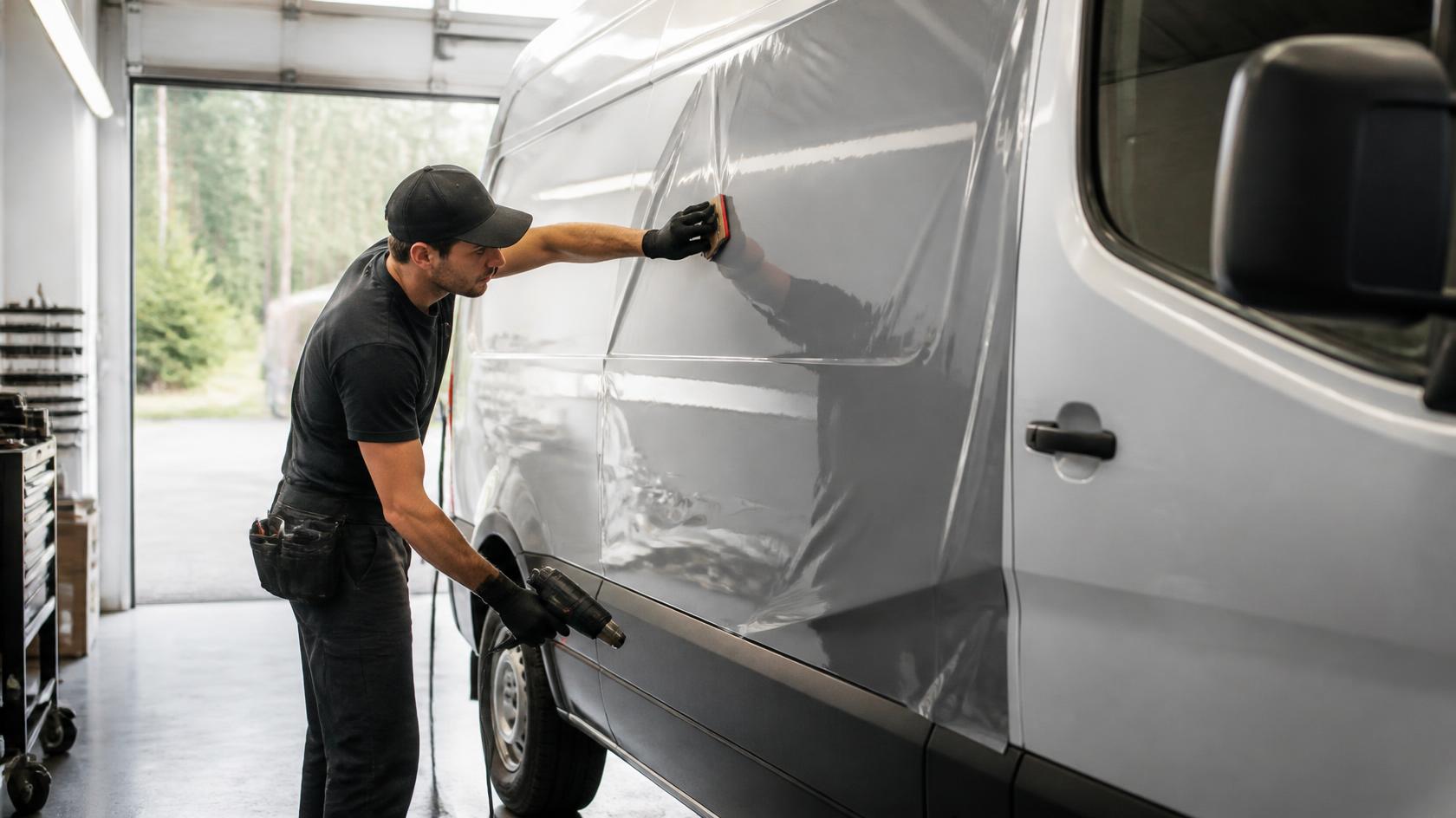
Are truck wraps worth it for contractors?
For most home improvement contractors, yes, if the truck spends its days in residential neighborhoods inside your service area. A wrap is a one-time cost spread over years of parking at job sites. It’s a bad buy if the truck mostly sits at a shop or drives highways outside the area you serve.
Say you pay $4,500 for a full wrap on a pickup and keep it five years. That’s $900 a year, or $75 a month. If the truck brings in one decent job a year that wouldn’t have come any other way, you’re ahead. Most contractors in residential trades will clear that bar easily, because the job site itself is the ad. A yard sign tells the street who’s working there for a few weeks. A wrapped truck does that on every job, for years.
Where wraps fall flat:
- The truck is a mess. A dented, muddy wrap with your name on it is a billboard for sloppy work.
- Nothing backs it up online. People see the truck, search your name, and find a bare Google profile with six reviews.
- You serve commercial clients who hire off bids, not off what drove by.
That second one is the real killer. A wrap starts the conversation. Your Google Business Profile, your reviews and your website finish it. JB’s Enclosures, a screen room and patio cover builder in Tennessee, had no website at all when they came to us. Once a proper website and a Meta campaign were in place, they pulled 73 leads in 30 days at $29.21 per lead. A truck alone wouldn’t have done that.
What is the difference between a wrap and vehicle graphics?
A wrap covers most or all of the painted surface in printed film, so the vehicle’s look changes completely. Vehicle graphics are smaller cut or printed pieces, like a logo, lettering and a phone number, applied over the existing paint. Graphics cost far less. Wraps get noticed more and protect more of the paint.
So which do you pick? If your truck is white and in good shape, clean vehicle graphics in your brand colors can look sharp for under $1,000. That’s a smart starting point for a one-truck operation. A partial wrap, usually the rear half plus the tailgate, gets you most of the visual punch for roughly half the cost of a full wrap. Full wraps make sense when the truck color fights your brand, or when you’re running a fleet and want every vehicle to look identical.
I’d rather see a crisp partial wrap than a busy full wrap. Every time.
What makes the best truck wrap design for contractors?
The best contractor truck wraps are readable in three seconds from a moving car. That means one strong brand mark, what you do in plain words, a phone number or short web address, and a lot of empty space. Photos of finished decks and kitchens almost never read at speed.
Here’s what I’d put on it, in this order of importance:
- Your trade, big. “Decks and Patios” or “Roofing” beats a clever slogan. People need to know what you do before they care who you are.
- Your name or logo. Same colors and type as your website, signs and shirts. If those don’t match yet, sort out your brand identity before you print anything.
- One way to reach you. A phone number or a short URL. Not both plus your email plus three social handles.
- Trust markers, small. Licensed and insured, maybe a review rating badge. Keep these on the rear doors where people read while stopped at a light.
And skip the stuff that looks good on a design proof and fails on the road. Thin script fonts. Low contrast colors like gray on silver. Text running across door handles and body seams, where letters get chopped. A wrap shop will print whatever you send them, so the design work is on you or on whoever built your brand. That’s a big part of what our creative branding work covers for contractors: one system that carries from the logo to the truck to the yard sign.
A Pacific Northwest note. Trucks here spend half the year wet and dirty, and the lower third of the body gets grimy fast. Keep anything important above the wheel wells. Dark colors also show road film less than white, which matters if you’re running jobs in Tacoma or Olympia from October through April.
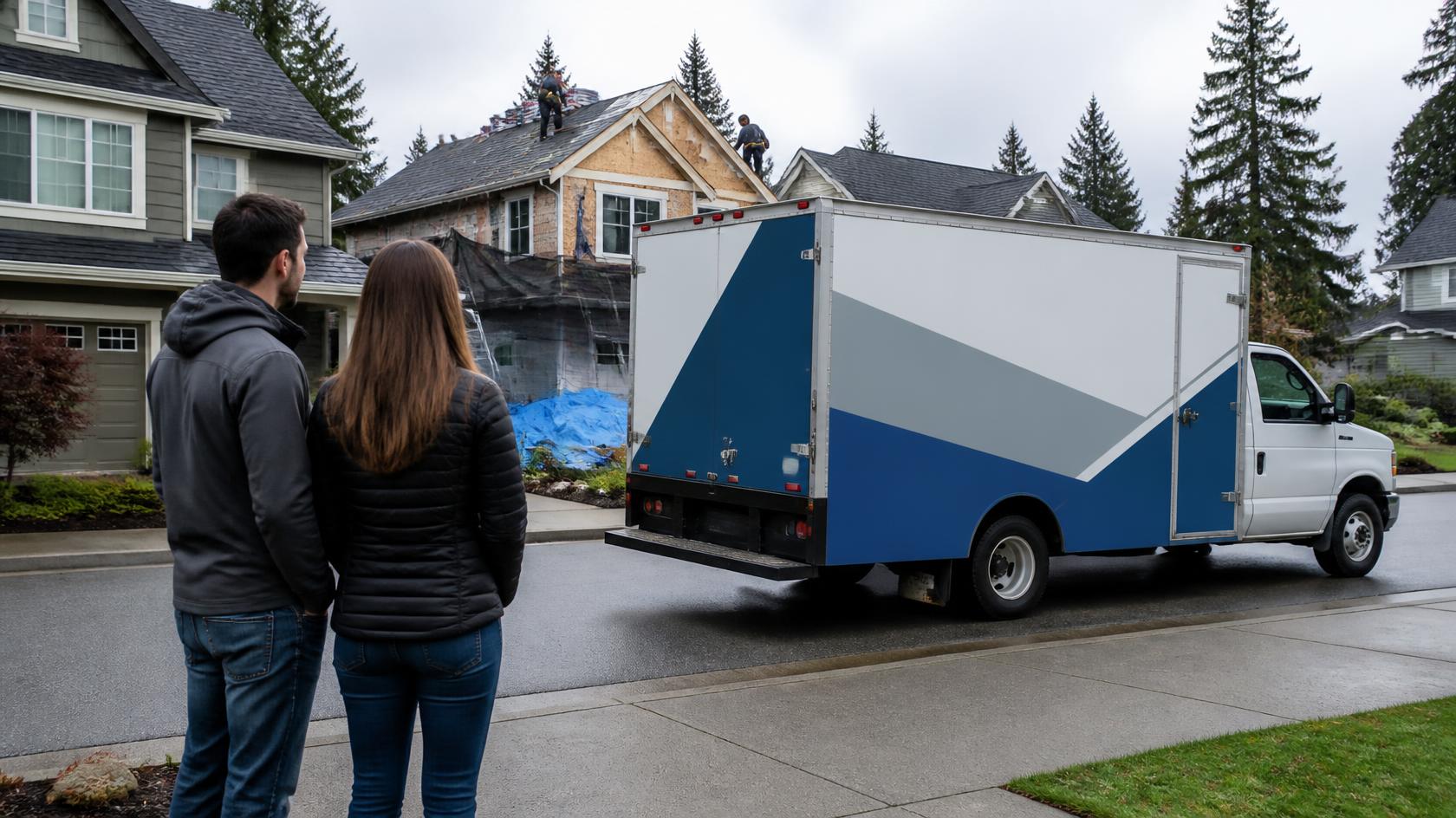
Do vehicle wraps generate leads for contractors?
They can, but you won’t know unless you track it. Most contractors get a wrap, feel busier, and can’t tell you if it brought in two jobs or twenty.
Two simple fixes. First, put a dedicated call tracking number on the truck, different from the number on your website and your Google profile. Every call to that number came from someone who saw the vehicle. Second, have whoever answers the phone ask how the caller found you, and log it. “Saw your truck on our street” is one of the best answers you can hear, because that caller already watched your crew work.
The neighbor effect is where wraps earn their keep. When you’re building a deck in a Puyallup subdivision, the houses on either side look a lot like your customer’s house. Same age, same lot size, same aging deck. A wrapped truck in that driveway for a week reaches the people most likely to hire you next.
If you want calls on a schedule instead of waiting for drive-bys, that’s a job for paid campaigns. Our pay-per-appointment program uses human appointment setters to book estimates for you, and the wrap makes the first visit look professional when your estimator pulls up.
How long does a vehicle wrap last?
A quality cast wrap film lasts several years on the sides of a truck and noticeably less on the hood and roof. 3M rates its 2080 wrap film for up to 8 years on vertical surfaces and up to 3 years on horizontal ones, with reduced coverage in desert parts of the Southwest.
So the sides of your van can easily outlast the hood. Sun is the enemy. A truck parked outside in Phoenix wears out faster than one parked in a garage in Everett. Hand washing helps a lot. Pressure washers held close to the edges can lift the film.
Where we work
We’re based in Washington State and build contractor brands, websites and lead campaigns for home improvement companies across the country. Locally, clients run from Everett and Seattle down through Tacoma, Puyallup and Olympia. One contractor per trade per service area, so we’re never designing a brand for your direct competitor down the road.
Washington, United States
Phone: (928) 482-6963
Branding, websites, local SEO and lead generation for home improvement contractors nationwide.
Frequently asked questions
How much does a car wrap cost?
A full wrap on a sedan typically lands around $2,000 to $4,500, and simple lettering can be a few hundred bucks. Pickups and vans cost more because there’s more surface to cover. Always get the film brand on the quote.
What should a contractor truck wrap include?
Your trade in big letters, your logo, and one phone number or short web address. Licensed and insured on the back is a nice touch. Leave off the photo collage and the list of fifteen services.
Full wrap or partial vehicle graphics?
If the truck is white and clean, start with graphics or a partial wrap and spend the difference on your website or reviews. Go full wrap when the paint color clashes with your brand or you want a matching fleet.
Do car wraps damage paint?
Not on healthy factory paint with a quality film and a pro install. Problems show up on repainted panels, failing clear coat, or cheap vinyl left on too long. Even 3M excludes paint pull during removal from its film warranty, so fix bad paint first.
Want a wrap that matches the rest of your brand instead of fighting it? See what our contractor branding includes, then Book a Free Strategy Call and we’ll look at your trucks, your site and your service area together.