
A contractor landing page is a single page built for one service, one area and one action: booking an estimate. A good landing page shows the job in the first screen, proves you’ve done that work nearby, and makes calling or requesting a quote take seconds. Zeal Media Solutions builds them for home improvement contractors nationwide from Washington State.
By Carl Jiang, Co-Founder · Last updated October 2026
We see this constantly. A contractor says their ads stopped working, we click the ad, and it drops us on a homepage with a slider, a mission statement and nine services. The ads were fine. The page was the problem. So here’s the anatomy of landing pages that book estimates, top to bottom.
What is a landing page?
A landing page is the page a visitor lands on after clicking an ad, an email or a search result, and it’s built to get one specific action. For a contractor that action is a call, a quote request or a booked estimate. It usually covers one service, often one city, and it strips out anything that pulls the visitor somewhere else.
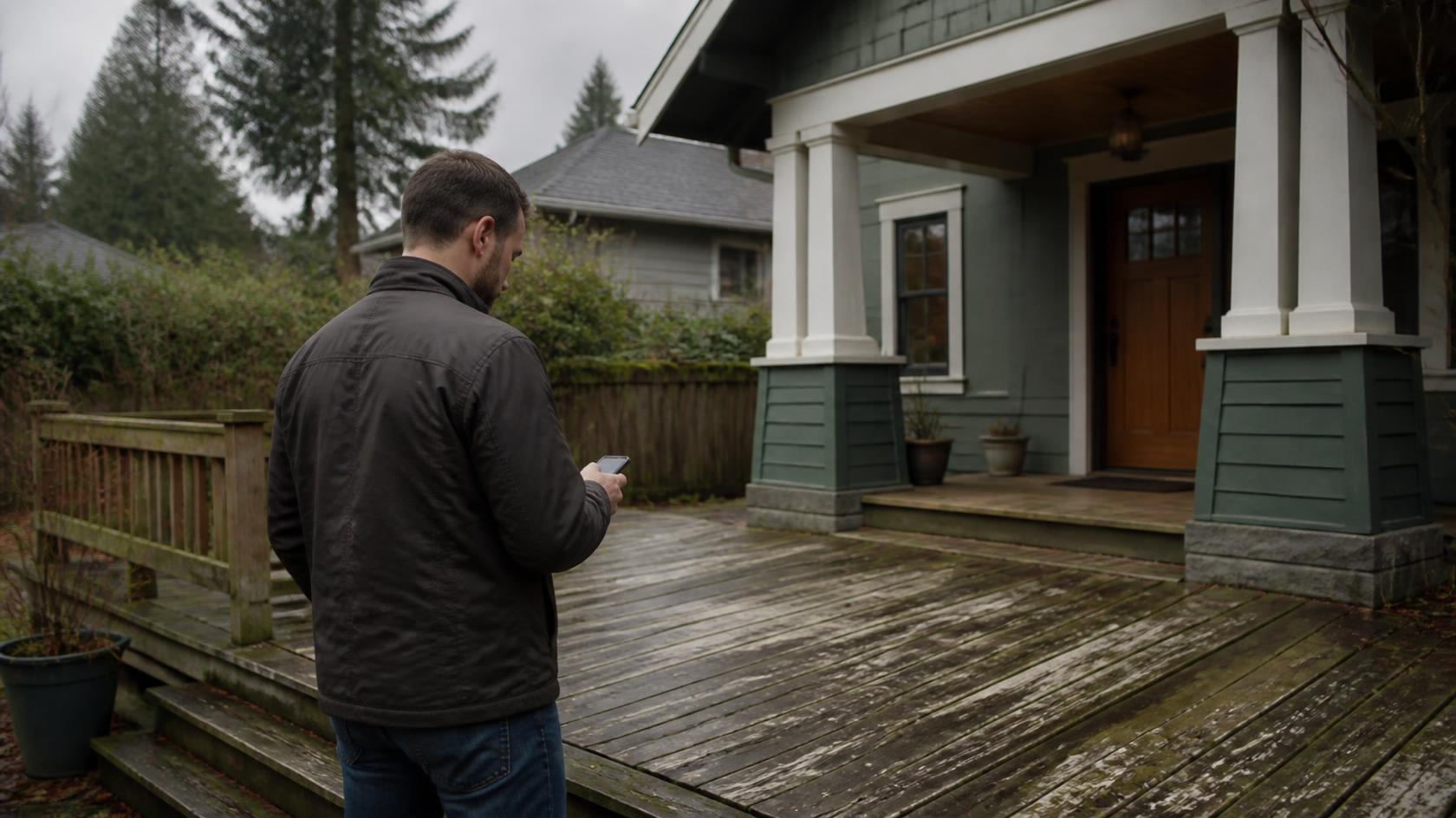
That last part matters more than people think. No full menu. No blog links in the header. No carousel of every service you’ve ever offered. Every exit you add is another chance for a homeowner with a rotting deck to wander off and fill out a form for somebody else.
Contractors use two kinds. Paid landing pages catch traffic from Google and Meta ads. Organic ones are your service and service-area pages, like “deck builder Tacoma,” which have to rank on their own and need more depth to do it.
Is a landing page different from a homepage?
Yes, and it’s the difference that costs contractors the most money. Your homepage introduces the company to everybody: past customers, job applicants, suppliers, the neighbor checking whether you’re still in business. A landing page talks to one homeowner with one problem and asks for one thing.
| Homepage | Landing page | |
|---|---|---|
| Who it’s for | Everyone who knows your name | One homeowner searching for one service |
| Goal | Explain the company | Book an estimate |
| Navigation | Full menu | Minimal or none |
| Services covered | All of them | One |
| Best traffic | Brand searches, referrals | Paid ads, service and city searches |
If you’re paying for clicks, don’t send them to the homepage. In our Google Ads guide for contractors we listed homepage traffic as the second most common reason campaigns underperform. And the clicks aren’t cheap. LocaliQ’s 2026 search advertising benchmarks put the home improvement category at $8.33 per click and $90.92 per lead. Pay that to land someone on the wrong page and you’re lighting money on fire.
What makes a good landing page design for contractors?
Good landing page design for a contractor is boring in the right way. It loads fast, reads easily on a phone, makes one offer, shows real photos and leaves no doubt about the next step. Here’s the anatomy we build, section by section. It’s the same checklist our website development projects start from.
The first screen
The headline names the service and the area. “Deck Builders Serving Tacoma and Puyallup” beats “Quality You Can Trust” every time. Under it goes a one-line promise, a tap-to-call button and a “Get My Estimate” button. Use a real photo of your crew or a finished job. Skip the stock shot of a smiling guy in a spotless hard hat; homeowners can smell it.
If someone on a phone can’t tell what you do and where within three seconds, nothing below gets read.
Proof that you’ve worked nearby
Next come reviews with first names and towns, a strip of photos from local jobs, your license number, years in business and your warranty. People hire the contractor they think their neighbors used. One review that mentions a specific job in a specific town does more work than a row of badges.
What happens after they reach out
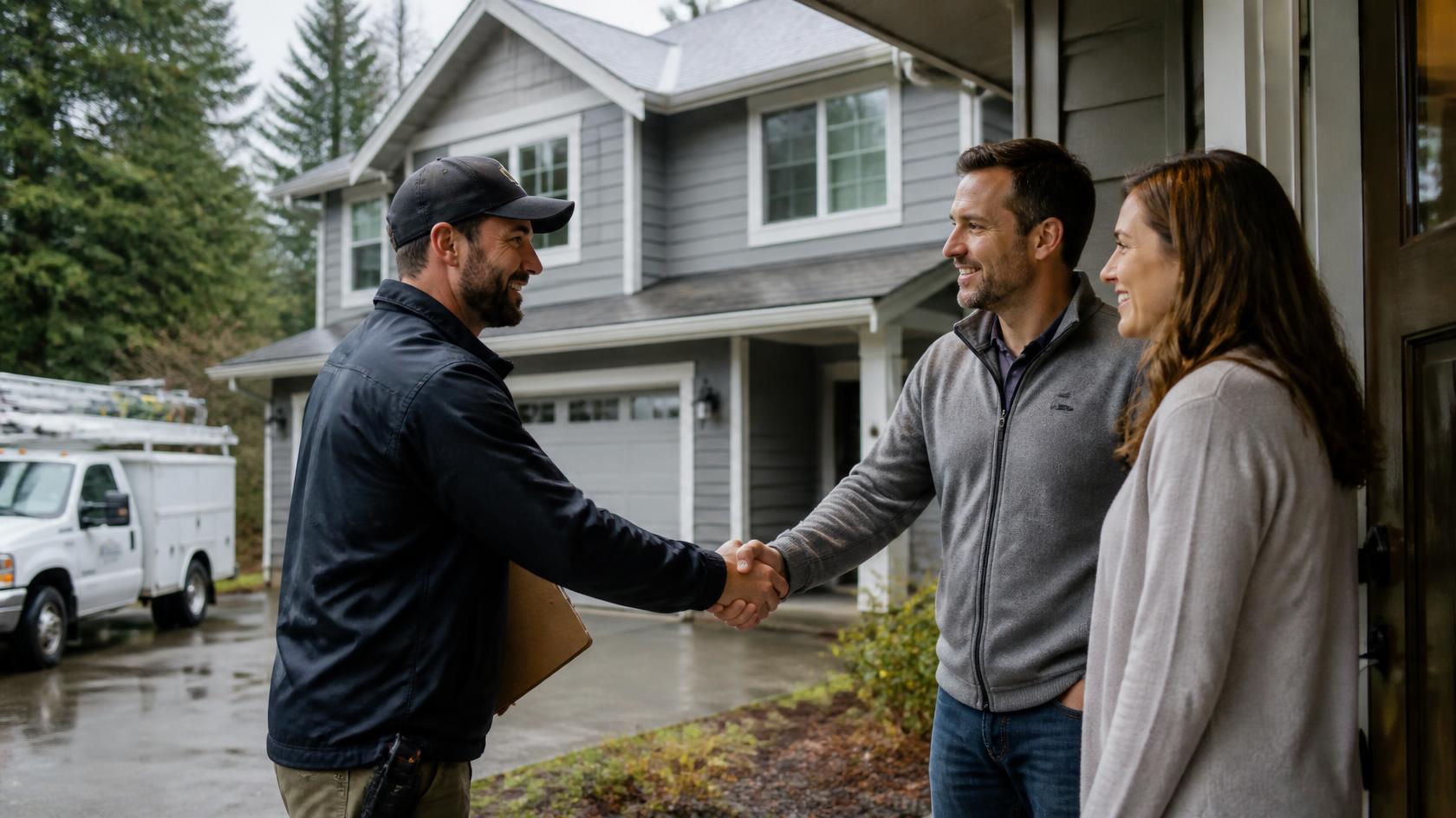
Spell out the process in three short steps. You call them back, you come out to measure, they get a written estimate. Uncertainty kills form fills.
And then you have to keep the promise. A lead that hits voicemail at 5:15 pm is often booked with someone else by morning. That’s why our pay-per-appointment program pairs the page with human appointment setters who call every lead back and put the estimate on your calendar. You pay for booked estimates instead of clicks.
The form and the phone number
Keep the form short. Name, phone, ZIP, the service they need and an optional photo upload is plenty. Every extra field costs you leads. Put the phone number in the header as a tap-to-call link, too. Some people want to talk. Some want to type. Give both.
Answers to the questions you hear at every estimate
Price range, financing, how far out you’re booked, permits, warranty. Answer them on the page in plain words. I’d always show a rough price range. It scares off the tire-kickers before they eat an afternoon of your crew lead’s time, and the serious homeowners appreciate it.
Speed
Most of your traffic is on a phone, often on a jobsite connection or a driveway with one bar. Compress the photos, drop the video autoplay and keep third-party scripts to a minimum. We broke down exactly how we cut load time on our own site in our post on page speed for contractor websites.
Which landing page builder should a contractor use?
Use whatever your website already runs on unless you have a good reason not to. For most contractors that’s WordPress, and building landing pages there keeps them on your domain where they help your SEO. Here’s how the usual options stack up:
- Your own WordPress site. Our default. Pages live on your domain, you own them, and organic service pages can rank.
- A dedicated builder like Unbounce or Leadpages. Great for quick A/B tests on paid traffic. You pay a monthly fee, and the pages usually sit on a subdomain that adds little to your search rankings.
- Wix or Squarespace. Fine if your whole site already lives there. Don’t split your site across platforms just for landing pages.
- Meta instant forms. Technically not a landing page, since the form opens inside Facebook. In our experience they bring more volume and more junk, so they need fast follow-up. More on that in our Facebook ads guide.
The builder matters a lot less than the anatomy above. A clean page in any tool beats a fancy one that hides the phone number. If you’d rather not build them yourself, our website development team builds contractor landing pages as part of the site.
What do the best landing page examples for contractors have in common?
I’d rather show you our own client work than screenshot somebody else’s site.
Alex Paints in Boardman, OH came to us for a site rebuild. We expanded the service pages, refreshed the portfolio with completed work, added quote-request calls to action everywhere and made it load faster. The first lead came in within 24 hours of launch, and they passed $200K in revenue within a few months.
For CBS Professional Painters in Vancouver, WA, we restructured the landing pages and linked their blog posts back to the service pages as part of the SEO work. Organic impressions grew about six times, from under 200 a day to more than 1,000.
Snoqualmie Construction got restructured service pages built around searches like “kitchen remodeling in Snoqualmie.” Twelve keywords now rank number one, and “kitchen remodeling services” climbed from position 28 to the top spot.
And JB’s Enclosures in Tennessee got a new mobile-friendly site with a project gallery, testimonials and a contact form, paired with Meta lead campaigns. One month of ads produced 73 leads at $29.21 each.
What ties them together? Each page sticks to one service. Each one uses photos of the contractor’s own work. And the ask for an estimate is never more than a thumb-scroll away.
How do you know if your landing page is working?
Track it against estimates booked. A form fill isn’t a job, and a page that pulls in 40 junk leads is worse than one that books 12 real estimates.
For a rough yardstick, Unbounce analyzed 41,000 landing pages and found a median conversion rate of 6.6% across all industries. LocaliQ’s figure for home improvement search ads is 8.05%. If paid search traffic converts well under 5% on your page, look at the page before you touch the ads. Make sure phone calls count as conversions too, or you’ll undercount badly.
After-hours leads are the other leak. An AI chatbot can answer basic questions and grab contact details until someone calls back in the morning.
Where we build contractor landing pages
We’re based in Washington State. Our Washington clients run from Everett and Lake Stevens down through Tacoma and Olympia, and we work with contractors in Oregon, California, Texas, Arizona, Georgia, North Carolina, Ohio and Tennessee. We take one contractor per trade per service area, so your landing pages never compete with another Zeal client’s.
Washington, United States
Phone: (928) 482-6963
Websites, landing pages, local SEO and paid ads for home improvement contractors nationwide.
Frequently asked questions
How long should a contractor landing page be?
Long enough to answer what a homeowner would ask before calling. For gutter cleaning, a couple of phone screens is plenty. For a full kitchen remodel or a new deck, people want more photos, process and pricing context, so the page can run much longer.
Do I need separate landing pages for each service?
Yes. Someone searching for roof repair doesn’t care about your siding, and Google matches ads and rankings to the page that fits the search best. Start with your two or three highest-value services and add more once those are working.
What is the best landing page builder for contractors?
Whatever your main site runs on, which is usually WordPress. Tools like Unbounce are handy for testing ad pages fast, but pages on your own domain keep paying off in search long after the campaign ends.
What conversion rate should a landing page get?
Unbounce puts the cross-industry median at 6.6%, and home improvement search ads average about 8% per LocaliQ. Treat those as a yardstick. What you really want to watch is cost per booked estimate.
Should landing pages use forms or phone numbers?
Both. Older homeowners and urgent jobs tend to call, while people browsing at 10 pm would rather type. A tap-to-call button up top and a short form below covers both crowds.
Want us to look at the page your ads are sending people to right now? Book a Free Strategy Call and we’ll tell you what’s costing you estimates.